Choosing the Right Impeller Pump for Your Needs

Get a Professional Sourcing Quote

Our pump experts will review your request and reply within 12 hours.
Choose Your Needs Optional Business Type
Customization Requirements Optional
Email
Name
Company Name & Website
Message
0/1000

impeller pump

Choosing the right  impeller  pump  is critical for ensuring efficient  fluid movement  in various  industrial applications. Impeller pumps are designed to convert rotational  energy  into kinetic energy, facilitating  the transport of  liquids in sectors ranging from  manufacturing to municipal  services. For B2B buyers, understanding the  specifications,  quality standards, and supplier reliability is paramount. This article  will guide  you  through selecting the right impeller  pump for  your project needs and navigating the purchasing process  effectively.
Where to Find Reliable Suppliers for Bulk Impeller Pump Orders

Where to Find Reliable Suppliers for Bulk Impeller Pump Orders

Finding trustworthy  suppliers for bulk impeller pump orders involves assessing several factors, including production capacity,  experience,  and quality  control processes. Start by researching manufacturers with a solid reputation in the industry, ideally with  experience in your specific application area.

Tips  for evaluating suppliers:

Industry  Experience: Look  for suppliers like Larissa  Motor, which has been producing high-quality electromechanical products since 1998. Their extensive experience can  indicate reliability  and expertise.

Certifications  and Standards: Ensure that the manufacturer complies with international standards and holds  relevant certifications. This can  include ISO certifications or  industry-specific approvals.

Production Capabilities:  Inquire about the supplier's production capacity,  lead times, and their ability to  handle bulk orders. Understanding their operational capabilities will help you gauge their reliability.

Customer Reviews: Seek testimonials or case studies from previous clients to assess the supplier's reputation  for quality and service. A supplier with a proven track record is more likely to meet your expectations.
Understanding the Quality Control Process for Impeller Pumps

Understanding the Quality Control Process for Impeller Pumps

Quality  control  is integral to the manufacturing of  impeller pumps, as it ensures that the  products meet specified performance and  safety standards. A  robust quality control process typically includes several key stages:

Material Inspection:  Before production  begins, raw materials are inspected for compliance with required specifications. This ensures  that the materials used in the  pumps are suitable for their intended application.

In-Process Testing: During manufacturing, various tests are conducted to monitor dimensional accuracy and performance  metrics.  This proactive approach helps identify any  potential issues before the final product is completed.

Final Inspection: Once production is complete, the pumps  undergo a thorough final inspection to verify  that they meet all specifications. This may include performance testing  under actual operating conditions.

Documentation: Reliable suppliers will provide  documentation of their quality control processes, including test results and compliance certifications. Ensure you request  this information  as part of your purchasing process.

Common Installation Challenges with Impeller Pumps and Solutions

Common Installation Challenges with Impeller Pumps and Solutions

Installing an impeller  pump  can present various challenges that may affect its performance and lifespan. Here are some common issues and recommended  solutions:

Alignment Issues: Misalignment can lead to premature  wear and failure. Ensure that the pump is  aligned correctly with the motor and  piping. Use  precision alignment tools during installation to  achieve  optimal alignment.

Inadequate Support: Pumps must be properly supported  to avoid  vibrations and operational issues. Consider using vibration-dampening  mounts or bases to provide stability during operation.

Suction Line Restrictions:  A poorly designed suction line can cause cavitation, leading  to pump damage. Design the suction  line with minimal bends and restrictions to ensure smooth fluid flow.

Seal Leaks: Improper sealing can lead to  leaks, affecting pump efficiency. Regularly check and  maintain seals, and  consider using high-quality materials to enhance durability.

Evaluating Material Advantages in High-Performance Impeller Pumps

The material used in the construction of impeller  pumps significantly influences their performance, durability, and suitability for specific  applications. Here are some common materials and their advantages:

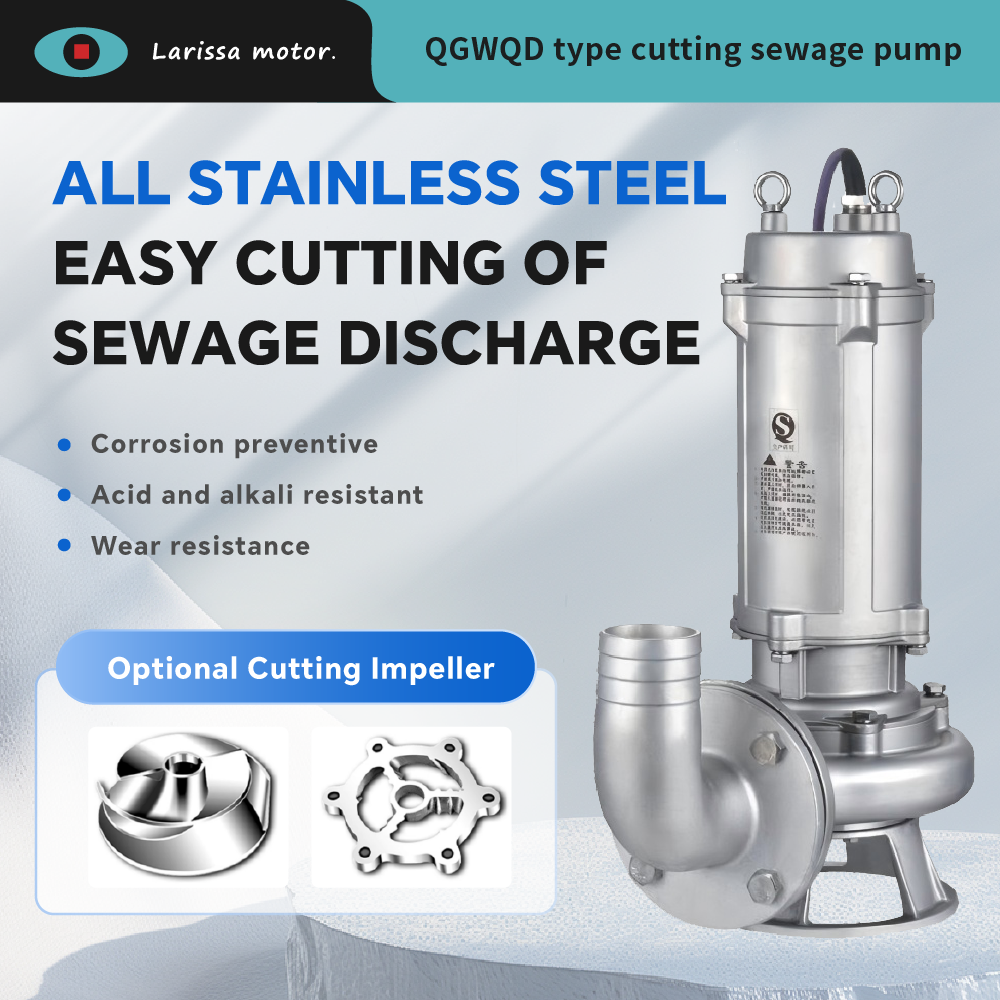
Stainless Steel: Known for its corrosion resistance, stainless steel is ideal for applications involving aggressive chemicals or  sanitary processes. It provides excellent strength and longevity.

Cast Iron: Often used in general industrial applications, cast iron offers durability  and good wear resistance. It  is suitable  for moderate temperature and pressure applications.

Polymer Materials:  For applications involving corrosive  substances,  polymer  materials can provide excellent chemical resistance. They are lightweight  and can reduce operational noise.

Bronze: This  material  is often  used in marine applications due to its corrosion resistance in saltwater. It also offers good wear properties and strength.

When choosing a material, consider the specific requirements of your application, including temperature, chemical exposure, and mechanical loads. Consulting with manufacturers like Larissa Motor can help you  determine  the best material for your needs.

By understanding these critical aspects of impeller pumps, B2B buyers can make informed purchasing  decisions and ensure that they select the right product for their projects. Whether you are looking for standard models or customized solutions, leveraging  the  insights provided here will  aid in the successful procurement and installation of impeller pumps. Additionally, consider options like the Solar Water Pump System for Farm Irrigation & Domestic Off-Grid Water Supply for your specific needs.

How to Choose the Right Impeller Pump for Your Project Needs

Selecting the appropriate impeller pump requires careful consideration of several factors, including the fluid type, required flow rate, and operating conditions. Begin  by identifying the specific application for the pump—whether  it’s for water treatment,  chemical processing, or food and beverage  production. Each  application may have distinct  requirements regarding pressure, temperature, and chemical compatibility.

Key specifications  to consider include:

Flow Rate and Head: Determine the required flow rate (measured in gallons per minute or liters per second) and the total head (the height to which the pump must raise  the fluid). These specifications directly impact  the performance and efficiency of the pump.

Material Compatibility: Depending  on the fluid  being  pumped, selecting materials  that resist corrosion, abrasion, or wear is crucial.  For aggressive fluids, consider pumps made  with stainless steel or specialized alloys. For instance, the DC CPM Centrifugal Water Pump for Solar Irrigation & Agricultural Water Transfer is a great choice for such applications.

Pump Type: Impeller pumps come in various designs, such  as centrifugal and positive displacement pumps. Centrifugal pumps are typically used for high flow rates at low pressure, while positive displacement pumps are better for high  viscosity fluids.

Customization Needs: If your project  has unique specifications, inquire about customization options. Manufacturers like  Larissa Motor can develop tailored solutions that meet specific performance criteria.

Get a Professional Sourcing Quote

Our pump experts will review your request and reply within 12 hours.
Choose Your Needs Optional Business Type
Customization Requirements Optional
Email
Name
Company Name & Website
Message
0/1000

Related product categories